The Brandy Old Fashioned Sweet is one of the most iconic regional cocktails in the United States, a drink so deeply woven into the culture of Wisconsin that it practically functions as the state’s unofficial handshake. But how did this sweet, fruit-forward twist on a classic old-fashioned come to be? The story stretches back more than a century and winds through world’s fairs, immigrant heritage, and the beloved tradition of the Wisconsin supper club.
The Origins of the Classic Old Fashioned
To understand the Brandy Old Fashioned Sweet, you first have to appreciate its ancestor: the original old-fashioned cocktail. The old-fashioned is widely considered one of the oldest known cocktails in American history, with roots going back to the early 1800s. The basic formula was simple and elegant: a spirit, a sugar cube, a few dashes of bitters, and a splash of water, stirred together and served over ice. Whiskey, typically bourbon or rye, was the spirit of choice for most Americans.
The drink was called an old-fashioned because, by the late 1800s, drinkers who preferred their spirits without the increasingly elaborate mixers and liqueurs that were becoming fashionable would request their cocktail made “the old-fashioned way.” The name stuck, and the drink became a cornerstone of American cocktail culture. Bartenders across the country built their reputations on how well they could execute this seemingly simple recipe, and the old-fashioned became a staple at every serious bar, restaurant, and supper club from coast to coast.
How Brandy Found Its Way Into the Glass
Here is where Wisconsin’s story diverges from the rest of the country, and it begins with immigration. Throughout the 19th century, large numbers of German immigrants settled across the Midwest, with Wisconsin being a particularly popular destination. German culture had a long and celebrated relationship with brandy, which was considered a refined and respectable spirit at home in Europe. When German settlers arrived in Wisconsin, they brought their taste for brandy with them, and it quickly became the preferred spirit in many communities throughout the state.
The 1893 World’s Columbian Exposition in Chicago is often cited as a pivotal moment in the brandy old-fashioned’s history. Korbel, a California-based brandy producer, is said to have introduced its brandy to a massive Midwestern audience at the fair, and the response was enthusiastic. Whether you fully accept that single origin story or view it as one thread in a longer narrative, the outcome is clear: by the early 20th century, Wisconsin drinkers had largely adopted brandy as their spirit of choice, and the old-fashioned was the ideal vessel for it.
The Sweet Variation Takes Shape
Ordering an old-fashioned in Wisconsin and getting something that looks and tastes very different from what a bartender in New York or New Orleans might pour is not a mistake. It is tradition. The Wisconsin version of the drink took on a character all its own over the decades, and the “sweet” variation became the most popular expression of that regional identity.
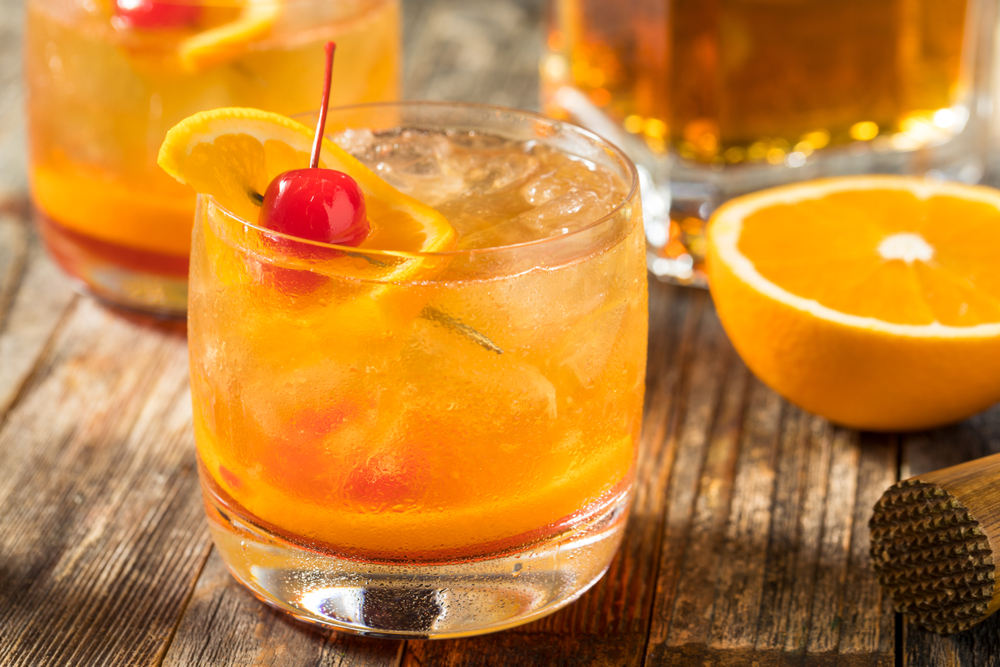
In the classic Wisconsin old-fashioned, the bitters and sugar are still present, but the drink is built differently. A maraschino cherry and an orange slice are muddled together with the bitters and sugar, adding a fruity sweetness to the base. Brandy is poured over ice, and then the defining choice comes: the customer specifies “sweet,” “sour,” or “press.” Ordering it sweet means the drink is topped with a lemon-lime soda such as Sprite or 7-Up, which softens the brandy and gives the cocktail a light, approachable finish. The garnish typically includes additional cherries and an orange slice, making it as visually appealing as it is delicious.
This sweeter, more generous style of old-fashioned was perfectly suited to the supper club environment where it flourished. Wisconsin supper clubs are a category unto themselves: relaxed, unpretentious, often family-owned restaurant destinations where the meal is an event rather than a transaction. At a supper club, you might wait an hour for your table, sipping a Brandy Old Fashioned Sweet at the bar while relish trays make the rounds. The cocktail and the supper club grew up together, each reinforcing the appeal of the other.
The Supper Club as Cultural Institution
It is nearly impossible to tell the story of the Brandy Old Fashioned Sweet without lingering on the supper club, because the two are inseparable in the Wisconsin imagination. The supper club concept originated in the mid-20th century, when roadside restaurant establishments outside of city centers began offering a full evening experience complete with cocktails, salad bars, prime rib, and a sense of occasion that distinguished them from ordinary dining.
Wisconsin embraced the supper club format with particular enthusiasm, and the Brandy Old Fashioned Sweet became its signature drink. Walking into a classic Wisconsin supper club today feels like stepping into a living museum of American leisure culture. The old-fashioned on the menu is not a relic; it is the centerpiece. Regulars order them by the round, and first-time visitors are gently guided toward the brandy version by knowing bartenders who understand that this is part of the experience.
The ritual of the drink matters here. The muddling, the specific soda, the careful garnish: every element signals that this restaurant takes its cocktail culture seriously, even while keeping things warm and approachable. The Brandy Old Fashioned Sweet is comfort in a glass, and it fits the supper club atmosphere the way a well-worn booth fits a regular customer.
A Modern Revival and Ongoing Legacy
For most of the 20th century, the Brandy Old Fashioned Sweet was something of a regional secret, beloved within Wisconsin but little known outside of it. That began to change as the craft cocktail movement of the 2000s and 2010s encouraged drinkers and bartenders everywhere to look at American cocktail history with fresh eyes. Regional traditions that had once seemed parochial started to look like fascinating expressions of local identity and heritage.
Bartenders at upscale cocktail bars began experimenting with Wisconsin-style old-fashioneds, and food and travel writers started making pilgrimages to supper clubs to document what they found. Articles in national publications celebrated the Brandy Old Fashioned Sweet as a genuinely distinctive American cocktail, one that told a specific story about immigration, regional taste, and the evolution of the old-fashioned format over time.
Wisconsin itself leaned into the recognition. The state ranks among the highest in the United States for per-capita brandy consumption, a statistic that local pride has only amplified over time. Korbel has noted publicly that Wisconsin accounts for a remarkable share of its national brandy sales, a fact that underscores just how deeply this tradition runs.
Today, craft versions of the Brandy Old Fashioned Sweet appear on menus at contemporary restaurant and bar programs across the country, often made with small-batch brandies and housemade cherries. But the soul of the drink still lives in Wisconsin, at the old-fashioned bar of a supper club on a Friday night, where the recipe has not changed in decades because there has never been a reason to change it.
Conclusion
The Brandy Old Fashioned Sweet is more than a cocktail. It is a record of who settled in Wisconsin, how they drank, and what they valued in a night out. From its roots in the classic old-fashioned to its transformation at the hands of German immigrant taste and supper club culture, this drink carries a remarkable amount of history in every glass. Whether you are a longtime Wisconsin native or a curious traveler pulling up a stool for the first time, ordering a Brandy Old Fashioned Sweet is an invitation to become part of that story.